
I just finished reading the latest book about Pete Rose. I learned of the impending release of Charlie Hustle: The Rise and Fall of Pete Rose, and the Last Glory Days of Baseball when author Keith O’Brien joined us for the February meeting of the Grantland Rice-Fred Russell Chapter (Nashville) of the Society for American Baseball Research (SABR).
What makes this book different from any previous book on Rose is that it is the first one written about baseball’s all-time hits leader in which Rose did not have control over the final content. O’Brien had access to Rose and conducted 27 hours of on-the-record interviews with him in 2021 before Rose inexplicably cutoff all contact with the author. O’Brien also spoke with several of Rose’s former teammates, including Larry Bowa, Bernie Carbo, Dan Driessen, George Foster, Tommy Helms, and Tony Pérez as well as with several of his opponents, including Gene Garber, Keith Hernandez, Davey Johnson, Fred Lynn, Nolan Ryan, and Luis Tiant.
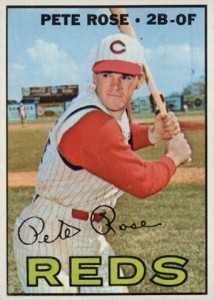
O’Brien, who grew up in Cincinnati, does a thorough job of chronicling Rose’s playing and managerial career while sewing the seeds of Rose’s gambling issues, extramarital affairs, and relationships with several shady characters along the way. The details of Rose’s playing career will bring back memories for fans who followed baseball when he was an active player. But I get the sense that O’Brien struggled with his subject, because having grown up with Rose the player, it was painful for him to have to put the unvarnished truth in writing.
I was familiar with most, if not all, the allegations regarding Rose before I read this book. What was new to me, however, was that the Cincinnati Reds, Major League Baseball, and the local Cincinnati press were aware of Rose’s out of control gambling long before MLB decided to do anything about it.
After reading this book, I believe that in many ways MLB, the Reds, the Philadelphia Phillies, the local writers, and perhaps to a lesser extent, the Montreal Expos, are partially to blame for the tragic story of Pete Rose. They basically enabled Rose by allowing him to get away with his terrible behavior and ignored his belligerent and often profane persona because the fans loved him, and they did not want to kill their cash cow.
O’Brien thoroughly covers the investigation into Rose’s gambling that led to his lifetime banishment from baseball, drawing on interviews and close examination of the Dowd Report. Toward the end of the book O’Brien brings up MLB’s current relationship with legalized sports betting and how it perhaps puts baseball in an awkward position where Pete Rose is concerned.

I understand how many of Rose’s supporters feel that it is hypocritical to continue to ban Rose from baseball now that fans can legally bet on the games. However, players still are prohibited from betting on baseball, and the penalty for doing so is still banishment from the game for life.
I believe if Rose had owned up to his deeds from the beginning instead of painting himself as the victim and portraying Commissioner Bart Giamatti as the villain, he would have been back in baseball long ago.
As O’Brien painfully details, Pete Rose is an old man now. He is a convicted felon who had several extramarital affairs, stiffed people on his debts, flaunted the rules, denied the evidence when he got caught, and then spent years lying about it.
But unlike many others, Rose has been held accountable for his actions–for almost 35 years. Maybe MLB should lift the ban. What damage could he do at this point?


 Cheap Hill 44
Leave a comment