Last month we traveled south to Mobile, Alabama, home of baseball legend Henry Aaron. I had wanted to make that trip for several years, so it was good to finally visit the Port City. Mobile is a scenic city with Mobile Bay opening into the Gulf of Mexico. The mouth of the bay is formed by the Fort Morgan Peninsula on the east and Dauphin Island on the west.
Several other major league players hailed from Mobile, including Hall of Famers Satchel Paige, Willie McCovey, Billy Williams, and Ozzie Smith. Of course, Tommie Aaron, Henry’s younger brother, also grew up in Mobile, as did Tommie Agee and Cleon Jones, who played for the 1969 Miracle Mets. Former Brave Frank Bolling was from Mobile, as were Amos Otis, Jake Peavy, and Juan Pierre.
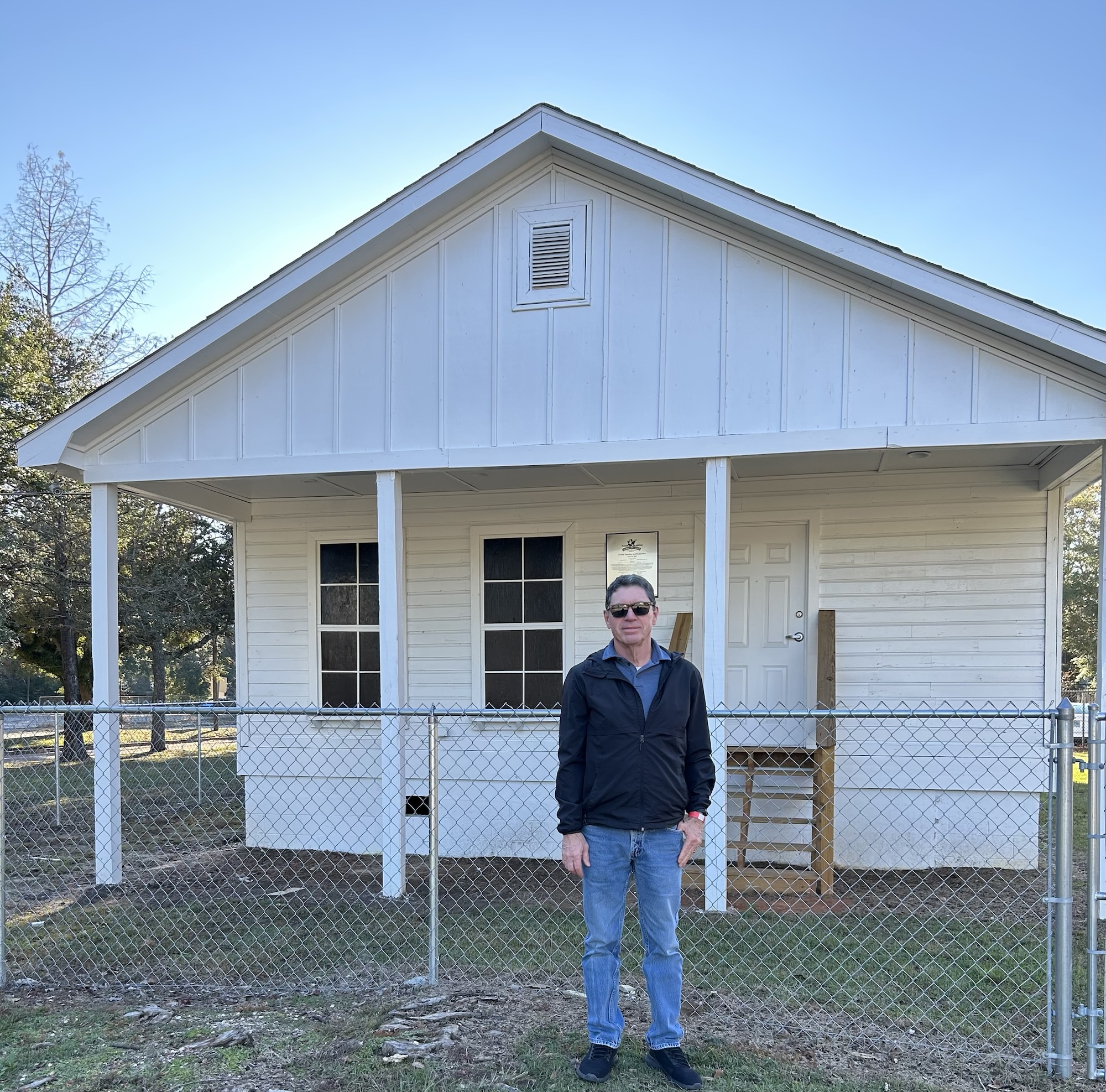
My primary reason for wanting to visit Mobile was to tour the Hank Aaron Boyhood Home and Museum. The Aaron house was moved from its original location in the Toulminville community to the site of Hank Aaron Stadium in 2008. Unfortunately, the Mobile BayBears left town for Huntsville after the 2019 season, the museum closed, and the house was moved back to Toulminville. While modest, the house looks as if it provided a fine home for Henry and his seven siblings.
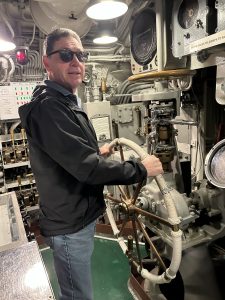
Mobile Bay is also the home of the USS Alabama Battleship Memorial Park. We toured the battleship, climbing up and down the decks of what really was a floating city, complete with food service, sleeping quarters, dental and medical facilities, in addition to all the necessary equipment for navigation and engagement. We even saw a sign that told us where Bob Feller slept when he served as an anti-aircraft captain with the U.S. Navy during World War II. The whole time we were aboard, I had an overwhelming feeling of claustrophobia, and that was with the knowledge that, unlike the sailors who served on this ship, I could head back to shore anytime I wanted to.
As if the tour of the battleship wasn’t claustrophobic enough, we also toured the USS Drum, a Navy submarine which saw action during WWII.
On our final day in Mobile, we ventured over the northern edge of Mobile Bay, traveled south to Gulf Shores, and then headed west to visit Fort Morgan, which stands at the tip of Fort Morgan Peninsula with Mobile Bay to the north and the Gulf of Mexico to the south.
The original fort on this site was Fort Bowyer, built during the War of 1812. Following that conflict, the U.S. decided they needed a stronger fort on the site, and construction on “The Work on Mobile Point” began in 1819. The U.S. government renamed the fort in honor of Revolutionary War hero, General Daniel Morgan in 1933, and construction was declared complete the following year.
In January of 1861, the Alabama State Militia, in the run-up to succession and the impending Civil War, seized Fort Morgan from the U.S. Government. It remained in Southern hands until August 1864, when a Union fleet stormed into Mobile Bay and defeated the Confederate fleet. After an overwhelming 24-hour bombardment, the Confederates surrendered.
Fort Morgan served as a strategic location during the Spanish American War and was reactivated as an ordinance depot for incoming and departing ships during WWII. In 1947 the War Department deeded Fort Morgan Military Reservation to the State of Alabama for use as the historical park it remains today.
With my pilgrimage to Mobile behind me, maybe someday I’ll make it to Long Island and have my picture taken in front of the Strat-O-Matic Game Company.
(The historical details of Fort Morgan primarily come from the site brochure printed by the Alabama Historical Commission.)


Leave a comment