
Last week the Atlanta Braves announced that hitting coaches Kevin Seitzer and Bobby Magallanes would not be back for the 2025 season. After hearing this news, my first thought was that someone had to be blamed for the severe decline in offense the Braves suffered this season, and Seitzer and Magallanes were the obvious choices.
Last season the Braves set a major league record with a .501 team slugging percentage; this year their slugging percentage was .415. Last season the Braves hit 307 home runs, tying the major league record; this year they hit 213. The Braves team batting average last season was .276; this season they hit .243. Last season the Braves on-base percentage was .344; this season it was .309. So, where did all that offense go?
Injuries contributed significantly to most of the drop in output at the plate. Sean Murphy, Ronald Acuña, Jr., Ozzie Albies, Austin Riley, and Michael Harris, II missed large chunks of the season; Acuña himself missed 113 games. Murphy hit 11 fewer home runs this year than he did in 2023, Riley was down by 15, Albies by 23, and Acuña by 37.
Of all the Braves who failed to match their home run totals from last season, only Matt Olson, Marcell Ozuna, and Orlando Arcia did not miss time due to injuries. Arcia hit the same amount of home runs this year (17) as he did last year, and Ozuna was only one homer short (40 vs. 39) of his 2023 total. Olson, however, hit 25 fewer home runs this season than he did last year. While it’s unrealistic to expect a player who hit 54 home runs one year to repeat or exceed such a performance, a 25-homer decrease is quite significant.
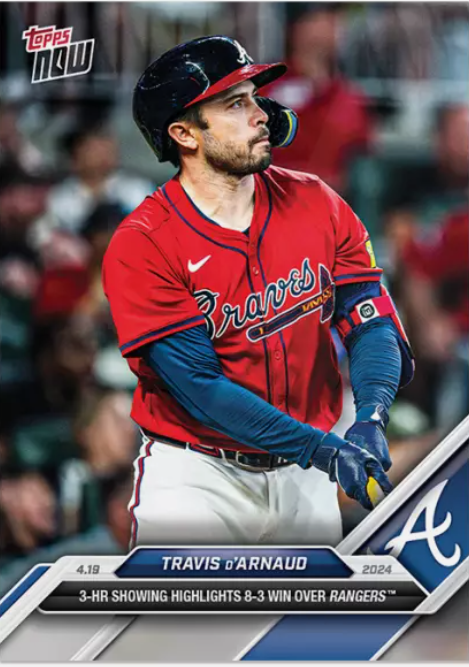
The only Braves player who had more homer runs in 2024 than he did in 2023 was Travis d’Arnaud (11 vs. 15).
Obviously, it would be unfair to blame either Seitzer or Magallanes for the reduction in offense the Braves suffered this season. But there is more to evaluating a team’s offensive performance than looking at how many home runs they hit or how much the team’s batting average, on-base percentage, and slugging percentage dropped.
For the most part, it appeared that the Braves’ hitters had no consistent approach at the plate. They frequently took hittable pitches and then flailed at pitches outside the strike zone. If the hitters found themselves ahead in the count, they did not appear to wait until they got a drivable pitch to hit. When they were hitting with a runner at third with fewer than two outs, it did not seem that they ever shortened their swings in an attempt to merely put the ball in play to score the runner. And with a runner at second base with no outs, it was rare that the batter attempted to hit the ball to the right side to advance him to third.
On a podcast few weeks ago, Chipper Jones expressed his frustration with the Braves’ approach at the plate. When the Braves announced that Seitzer and Magallanes were not coming back, Jones said that his earlier comments about the Braves’ offense were not meant as criticism of Seitzer and Magallanes because he knew they were preaching the right message.
Do major league players really need coaches to tell them to get a good pitch to hit, not to swing at pitches over their heads or in the dirt, hit the ball where it’s pitched, or reduce their swing with two strikes? Those seem to be basic tenets of hitting at any level.
(All statistics are from Baseball Reference. References to comments by Chipper Jones are from the “Casa de Klub #10” podcast of August 19, 2024 and from Jones, Chipper, 2024, @RealCJ0, October 11, 2024.)


 Cheap Hill 44
Leave a comment