Last week I posted about the Classic baseball Era Committee voting Dick Allen into the National Baseball Hall of Fame and focused my perspective on comparisons between Allen and some of the game’s all-time greats.
One of the statistical rabbit holes I went down while preparing that post dealt with whether a player’s chances for getting into the Hall of Fame were better if he had a short career of 10 or 12 great seasons, or if he had 10 great seasons followed by 10 or 12 years of declining performance.
Players must play a minimum of 10 years to be eligible for the Hall of Fame. Therefore, it seems that any player who had 10 great seasons should get in no matter when he had those seasons or how his career statistics compare with players who played for many more years. This theory would lead to a bigger Hall of Fame, something many fans do not want.
Several players in the Hall of Fame had relatively short careers and did not reach any of the plateaus like 500 home runs or 3,000 hits for batters and 300 wins or 3,000 strikeouts for pitchers that usually ensure enshrinement.
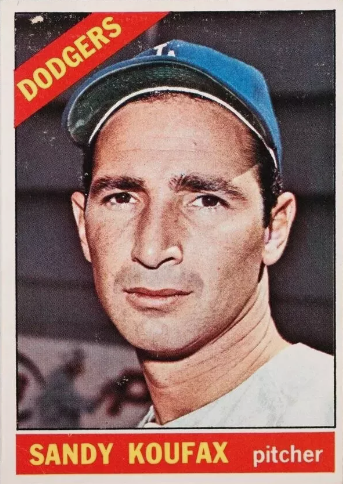
Sandy Koufax pitched just 12 seasons in the big leagues, and he won only 165 games. He did not have a good season until his seventh year, and he followed that with another good season. But then his final four years may be the most dominant seasons by a pitcher in baseball’s modern era. For that, Koufax got into the Hall of Fame in his first year of eligibility.
No rational baseball fan would argue that Koufax should not be in the Hall of Fame. However, I wonder whether he would have gotten in so easily had he started his career with four dominant seasons, followed by two good seasons and six ordinary-to-poor seasons.
Ralph Kiner played just 10 years, but he led the National League in home runs his first seven seasons. Kiner then hit 35 homers in his eighth year, tailed off to 22 in year nine, and hit 18 in his final season. He wrapped up his career after the 1955 season with 369 homers and an on-base percentage of .398 but did not get into the Hall of Fame until 1975–after 13 years on the ballot.
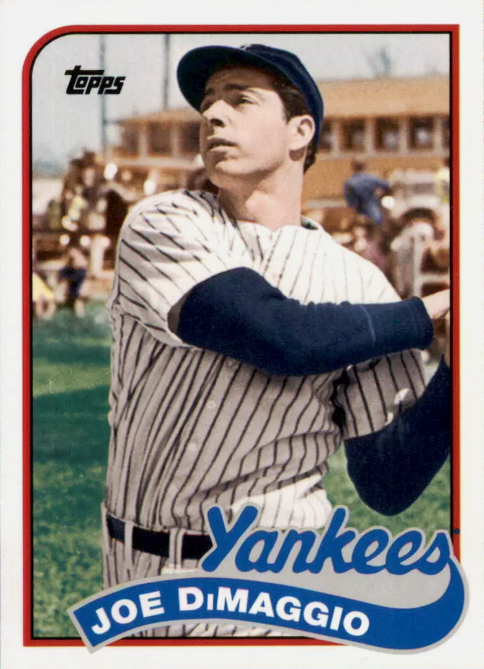
Joe DiMaggio–the Yankee Clipper, Joltin’ Joe, the guy with the 56-game hitting streak, a .325 lifetime batting average, a .398 lifetime on-base percentage, who played on 10 pennant winners, nine of which won the World Series, won three MVP awards, and despite missing three prime years of his career to military service, still hit 361 home runs and drove in 1,537 runs–yes, that Joe DiMaggio–did not get elected to the Hall of Fame until the third year he was on the ballot. The only explanation I have for it taking Joe D. three ballots to get in is that he only played 13 seasons.
I wonder whether players like Dale Murphy and Andruw Jones would have been better off had they quit at the peak of their careers rather than playing a few more seasons and fading into oblivion.
There are those who worry that electing players like Allen and Dave Parker through avenues like the Era Committees is making the Hall of Fame too big. I always counted myself among that crowd. However, according to Baseball Reference, while there have been 23,270 Major League Baseball players, only 275, or 1.1%, of them are in the Hall of Fame. That doesn’t sound like a very big Hall to me.
(All statistics are from Baseball Reference.)


 Cheap Hill 44
Leave a comment