One of the things I always liked about baseball is that you can use numbers to make a logical case for most any argument you propose about the sport. So, please be patient with me while I throw a bunch of stats at you to justify a new reason for me to hate interleague play.
I am a baseball traditionalist, so I liked that Major League Baseball kept the American and National Leagues completely separated except for the World Series and All-Star Game. As if interleague play was not egregious enough when it began in 1997, with teams playing 15 or 16 interleague games, this past season the number of interleague games increased to 46 games per team, or a whopping 28.4% of the schedule. Which, strangely enough, brings me to Willie McGee and the 1990 National League batting title.
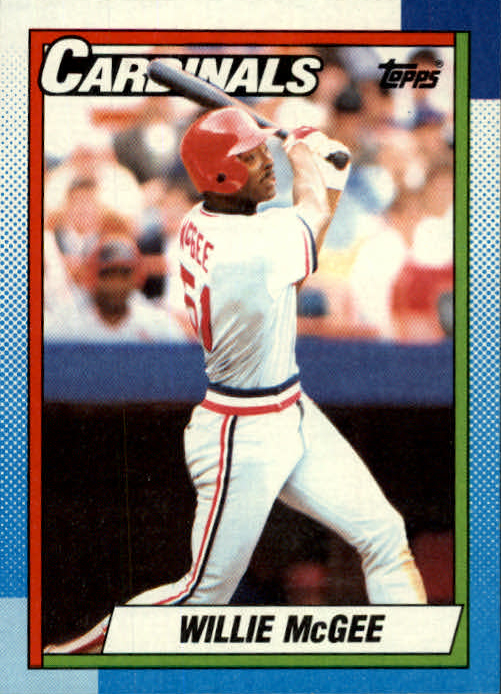
The St. Louis Cardinals traded McGee to the Oakland Athletics on August 29 of that year; at the time McGee was hitting .335 and had 542 plate appearances. To qualify for a batting title a player must accrue 3.1 plate appearances per his team’s scheduled games; that’s 502 plate appearances in a 162-game schedule. Therefore, McGee already qualified for the batting title before the Cardinals traded him.
McGee played 29 games in the American League after the trade and hit .274, dropping his combined batting average for the season to .324. Eddie Murray of the Los Angeles Dodgers hit .330, but McGee won the NL batting title based on his average with the Cardinals. McGee had the highest average of all hitters in NL competition. The fact that he hit only .274 in the AL had no bearing on the NL batting title.
So, where am I going with all this? The dramatic increase in interleague play begs the question, for me at least, of whether MLB and its fans should consider Luis Arráez of the Miami Marlins and Yandy Díaz of the Tampa Bay Rays to be the 2023 batting champions of their respective leagues.
I’ll start with Arráez. He finished the season with a .354 batting average, 17 points higher than his closest rival, Ronald Acuña, Jr. of the Atlanta Braves. Arráez hit .359 in games against NL opponents, while Acuña hit .345. Therefore, it seems that Arráez truly is the 2023 NL batting champ.
In the AL, Díaz finished the season with a .330 average, three points higher than his closest rival, Corey Seager of the Texas Rangers. However, Díaz hit .327 vs. AL pitching and .335 against the NL, while Seager hit .328 against AL opponents and .326 vs. the NL. Therefore, it seems to me that Seager is the true AL batting champion.

These calculations take into account that Arráez, Acuña, Díaz, and Seager all had at least 360 plate appearances (3.1 x 116 games played within their respective leagues) and therefore qualified for the batting title in my scheme of things.
Of course, all of this is way more nuanced and took way more thought than either Bud Selig, current commissioner Rob Manfred, and the players union likely put into their decisions to implement and expand interleague play.
I realize MLB cannot go back and give Murray the 1990 NL batting title. But maybe they should address this right now by recognizing Seager as the 2023 AL batting champion. Otherwise, it would make more sense to just crown one hitter as the MLB leader in batting average and do away with the separate league titles.
And by the way, using this same logic they can acknowledge Sonny Gray as the 2023 AL ERA Champion.
(Statistics are from Baseball Reference and MLB.com.)


 Cheap Hill 44
Leave a reply to What Happened to Earl Williams on His Way? – Cheap Hill 44 Cancel reply