
Last month the Classic Baseball Era Committee chose Dick Allen and Dave Parker as the newest members of the National Baseball Hall of Fame. Allen and Parker were exceptional players, and I have read plenty of legitimate arguments for them being in the Hall of Fame. I do, however, take issue with at least one school of thought on why Allen should have been elected.
For the past few years, many writers have sliced and diced the numbers to make comparisons between Allen and players already in the Hall of Fame. A frequent tactic is to compare Allen’s totals from his first 11 full seasons to other greats of the game who also played during that period.
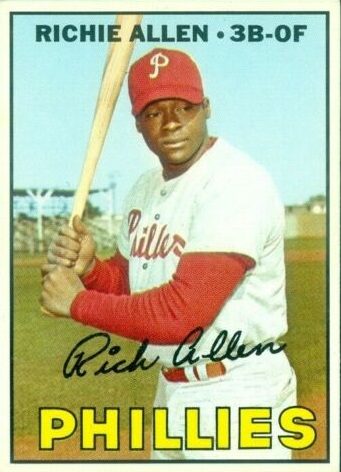
Nuggets like this one from Gare Joyce with SportsNet are generally how these writers like to begin their case for Allen being in the Hall of Fame:
From 1964 to 1974 Allen had the best OPS in baseball–and of the next 10 batters on that list, nine are in the Hall of Fame–first-ballot types, including Hank Aaron, Willie Mays and Willie McCovey among others.
First of all, Allen’s on-base plus slugging percentage for those 11 seasons was .940, which is one point lower than Aaron’s during that same period. And 1964-1974 were Allen’s first 11 full seasons, while Aaron and Mays were playing through their thirties and into their forties during those years.
Allen hit 319 homers, had 975 runs batted in, and hit .299 during that span. Those are some impressive numbers, but Aaron hit 391 home runs, drove in 1,085 runs, and hit .299 during those same seasons.
It really is absurd to compare Allen to Mays and Aaron; not many players in the Hall of Fame would stack up well against those two. But if someone chooses to venture into that territory, then a more valid comparison would be to look at how the first 11 seasons for Allen, Mays, and Aaron stack up against each other.
Since Mays missed most of the 1952 season and all of 1953 on military duty, I’m using his totals from 1951 and then 1954-1963. His OPS for those seasons was a whopping .980, and he hit 402 homers, had 1,156 RBIs, and hit .316.
From 1954-1964, Aaron’s OPS was .943. He also hit 366 home runs, drove in 1,216 runs, and had a .320 batting average.
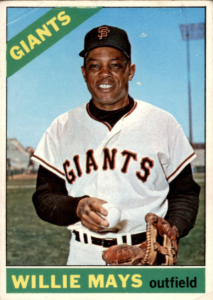
It also is worth mentioning that Mays and Aaron were two of the best defensive outfielders in baseball during their first 11 seasons, while Allen was a liability on defense wherever he played.
Allen didn’t play long enough to amass 500 homers or 3,000 hits, numbers that make a player with no connection to performance-enhancing drugs an automatic selection for the Hall of Fame. However, his .292 career batting average, .378 career on-base percentage, and .912 career OPS are nothing to sneeze at, nor are his 351 career homers as a first and third baseman. Allen was the 1964 National League Rookie of Year and the American League Most Valuable Player in 1974. He probably should have been the NL MVP in 1966 when he hit 40 home runs, drove in 110 runs, batted .318, and led the league in slugging at .632 and OPS at 1.027.
A better way for people to justify Allen being in the Hall of Fame would be to point out that a player only has to play 10 seasons to be eligible for the Hall, and that Allen was a dominant hitter for 11 years. But just stop with the comparisons to guys like Willie Mays and Henry Aaron.
(All statistics are from Baseball Reference.)


Leave a comment