
In their second game of the season, the New York Yankees blasted nine home runs, five of which came from players using the so-called torpedo bats. From the sandlot to the House that Ruth Built, if a player tries something new and is successful, then several other players are going to try it as soon as they can.
The torpedo bat is all the rage, and if I were a betting man, I’d wager that half the players will be using them by the All-Star break, and it’s just a matter of time before a nine-year-old walks into a municipal park somewhere with one resting on his shoulder like a hobo bindle.
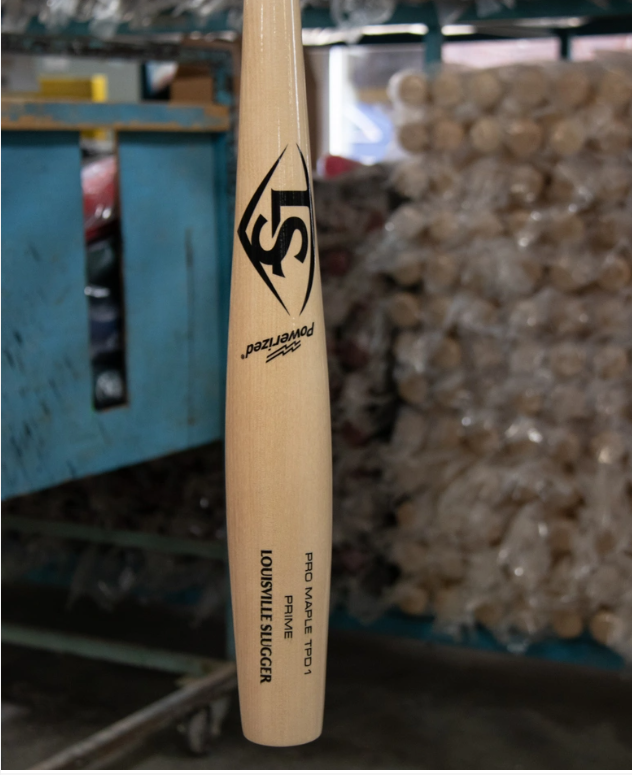
Torpedo bats have more mass in the sweet spot, which is more toward the middle of the bat. To accommodate the larger area, the bat tapers from the sweet spot toward the end. My first reaction to hearing about all the home runs with the odd-shaped war clubs was, “Wait a minute. How can those things be legal?”
Rule 1.10(a) covering what constitutes a legal bat states: “The bat shall be a smooth, round stick not more than 2.61 inches in diameter at the thickest part and not more than 42 inches in length. The bat shall be one piece of solid wood.” So, while they are not your father’s Louisville Sluggers, the torpedo bats are totally legal.
The five-homer barrage and the fact that the Yankees were the team who launched it likely led to the torpedo bats drawing more attention than they normally would have, but it’s way too early to know whether they will prove to be good or bad for baseball. After all, changes in equipment design are nothing new to baseball.
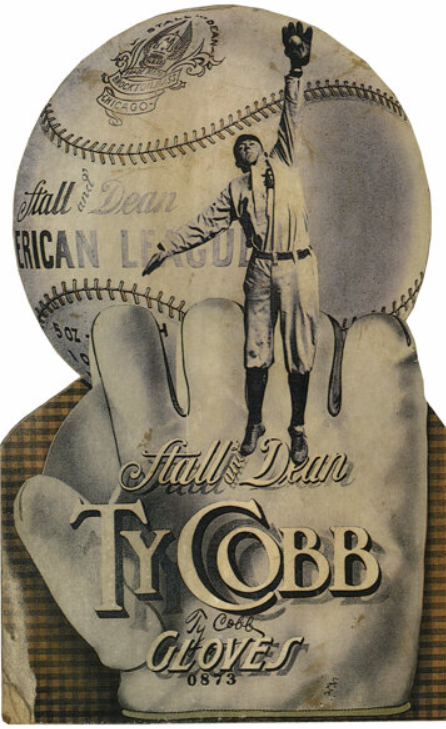
Other changes had a much more dramatic effect on the sport than the torpedo bat likely will. Baseball became a much different game in 1920 when the lively ball came into use. And I’m glad the fielders aren’t out there trying to catch flies and field grounders with gloves like Ty Cobb, Napoleon Lajoie, and their peers used back in the early days of the twentieth century.
That being said, I would hate to see any innovation in baseball equipment have the same effect as the modern tennis racket had on that sport. I loved watching John McEnroe and Bjorn Borg run each other all over the court at Wimbledon using their wooden rackets. With the introduction of graphite and carbon fiber rackets, the game became focused on powerful serves and aggressive baseline play, and I couldn’t tell you the last time I watched a match.
Speaking of tennis, it now seems that the ball is in the pitcher’s court. Just as some physics guru came up with the torpedo bat design, some data miner will figure out which pitches in which locations are the best way to approach a hitter using one. It seems to me sliders away or hard fastballs inside would be a good start.
I don’t believe MLB is going to overreact to the torpedo bats. They will wait until there are enough data to determine whether they have a dramatic effect on the game and whether that effect is positive or negative. After all, tapered bats are not an entirely new concept; it’s just that previous iterations did not change size as dramatically, so they went virtually unnoticed by fans.
Finally, I don’t know why they call those things torpedo bats anyway; they look more like an elongated bowling pin. Maybe it’s a marketing issue. What self-respecting baseball player would swing something called a bowling pin bat?


 Cheap Hill 44
Leave a reply to Steve Myers Cancel reply