I recently finished reading a great baseball book by Alan D. Gaff entitled Baseball’s First Superstar: The Lost Life Story of Christy Mathewson. Gaff is President of Historical Investigations, a company specializing in historical research and is also the author of Lou Gehrig: The Lost Memoir. All things considered this just might be the best baseball book I’ve ever read. And that is no small claim as I have been reading baseball books since I was eight years old.

I’ll try to tell you why I liked this book so much without including too many spoilers. I’ve always felt that Christy Mathewson doesn’t get as much credit for his greatness as he deserves. He won 373 games and had a career earned run average of 2.13. Mathewson pitched three complete-game shutouts in the 1905 World Series while walking just one batter. And oh yeah, he pitched 435 complete games. He was elected to the Baseball Hall of Fame in their first class of inductees in 1936. But Mathewson’s many career accomplishments are not what’s at the heart of this book.
After Mathewson passed away from tuberculosis at the age of 45 in 1925, there were plenty of eulogies, but he was such a beloved player—such a beloved person, really—that no obituary or newspaper column could pay adequate tribute to him.
Mathewson’s widow, Jane, was on a mission to publish a more intimate portrait of her husband, so she reached out to Bozeman Bulger, a prominent sportswriter who knew Mathewson for over twenty years. Bulger published a series of articles titled “The Life Story of Christy Mathewson.” Bulger was aided in his efforts by exclusive accounts from Jane, and several chapters from an unpublished autobiography found in Mathewson’s papers following his death. What Gaff has done in his latest book is draw from these writings to give readers a special look at Mathewson’s life from a previously unexplored perspective.
Gaff begins the book by pointing out that Mathewson began his career at a time when sports writing in general and baseball coverage specifically were in their infancy. These were the days when the teams paid the expenses for writers to travel with and stay in the same hotels as the players in order to ensure more extensive coverage of their teams. Bugler covered the New York Giants, and he and Mathewson developed a strong friendship. Mathewson schooled Bulger on the finer points of the game and gave him pointers on what he should cover in his column, which made him Jane’s obvious choice to write her husband’s life story.
Gaff tells us how the term “superstar” came into existence in the first place and then presents his reasoning for why baseball’s first superstar was not Honus Wagner, Ty Cobb, Walter Johnson, or even Babe Ruth.
The book includes some humorous stories (Mathewson was an expert at checkers, chess, and card games), the origin of his actual nickname (it wasn’t Big Six), as well as sad details about Mathewson’s service during World War I as a captain in the Chemical Warfare Service. The chapter on Mathewson’s final days at Trudeau Sanatorium in Saranac Lake, New York is heartbreaking.
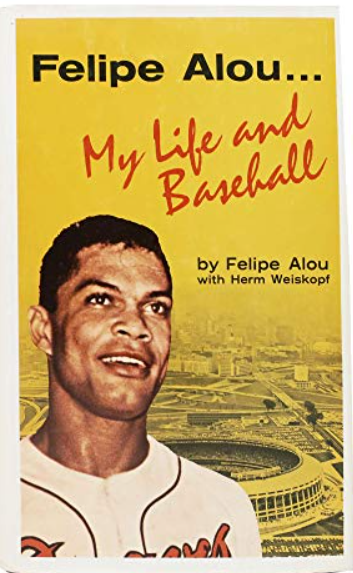
The first baseball book I read was Felipe Alou…My Life and Baseball by Alou and Herm Weiskopf, so it always will be on my list of favorites. I really enjoyed Ted Williams by Leigh Montville, Luckiest Man: The Life and Death of Lou Gehrig by Jonathan Eig, and Clemente by David Maraniss. But in my opinion, Baseball’s First Superstar: The Lost Life Story of Christy Mathewson is better than all of them.


 Cheap Hill 44
Leave a reply to Steve Myers Cancel reply