One of the gifts I received for Christmas was the original 1968 New York Mets 20-card Strat-O-Matic Baseball team set. Flipping through the player cards had me thinking about a couple of things related to the ‘68 Mets.
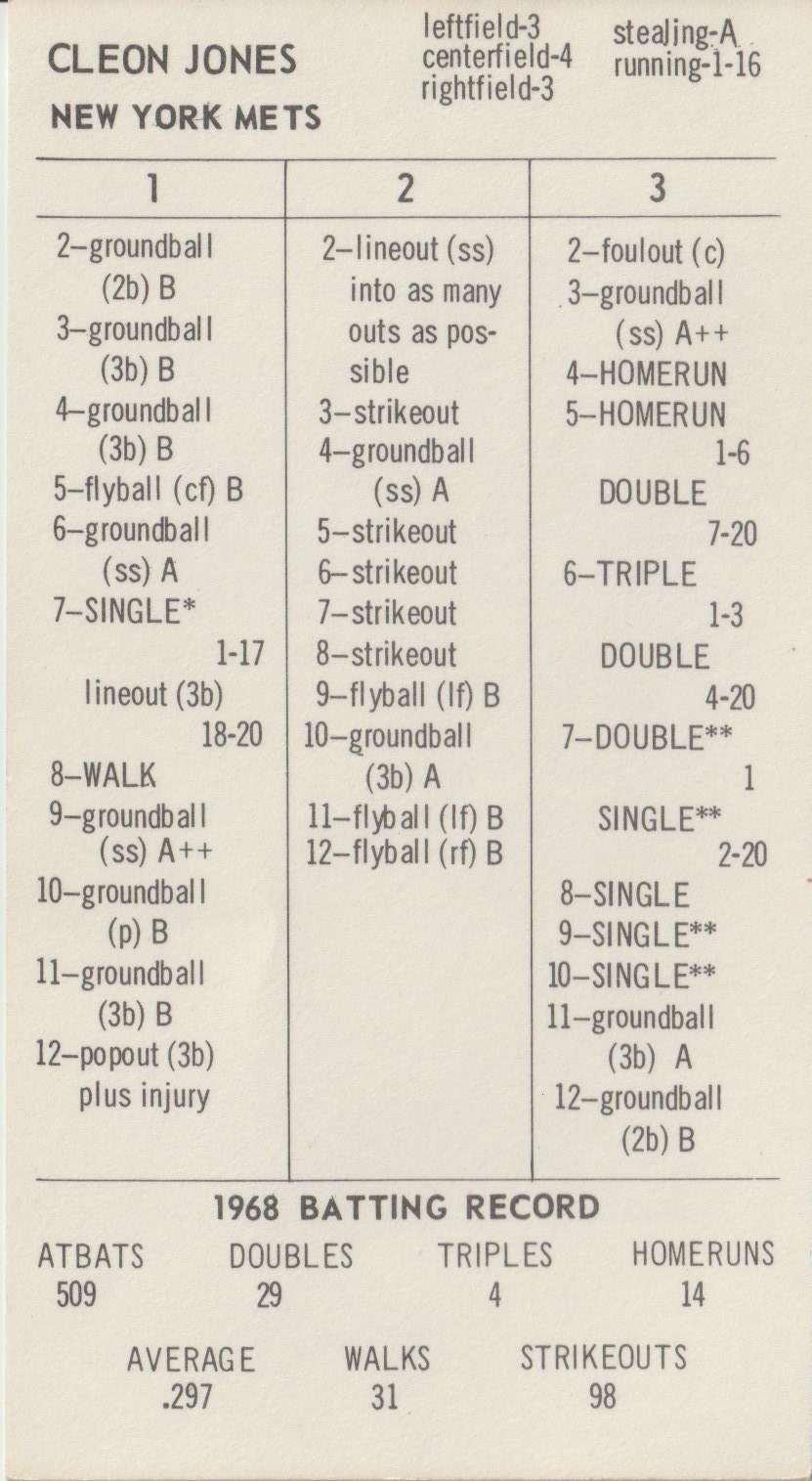
The most productive hitter on that team was Cleon Jones, who hit .297 with 14 home runs. Any time I see a reference to Jones, I think about the rarity of position players who batted right-handed and threw left-handed. Such players rarely have enjoyed much success in the big leagues. In fact, Rickey Henderson is the only nonpitcher who batted right-handed and threw left-handed in the Baseball Hall of Fame.
Other than Henderson, the career and single-season leaderboards are basically devoid of any righty/lefty players. Of the 250 batting titles from 1901-2025, a grand total of one belongs to a player who batted right and threw left. Hal Chase of the Cincinnati Reds led the National League with a .339 average in 1916. While Chase owns the only batting title among such players, Jones hit .340 in 1969, which may be the highest batting average by a righty/lefty player in MLB history. However, it is difficult to research such things since no downloadable database I checked contains dedicated columns for batting and throwing handedness.
Not a single player with 500 career home runs batted right and threw left; Henderson has the most with 297. No righty/lefty player other than Henderson topped the 3,000-hit mark; Rickey had 3,055.
On the flipside, players who bat left-handed and throw right-handed have had remarkable success over the years. Of those 250 batting titles previously mentioned, 77 were achieved by players who batted left and threw right. While that is impressive, I discovered that 57 of those 77 batting titles belong to just 15 different hitters: Ty Cobb (11), Rod Carew (7), Ted Williams (6), Wade Boggs (5), Luis Arráez (3), George Brett (3), Joe Mauer (3), Tony Oliva (3), Larry Walker (3), Carl Yastrzemski (3), Richie Ashburn (2), Dave Parker (2), Pete Runnels (2), Ichiro Suzuki (2), and Christian Yelich (2).
There has been a lot of research on why lefty/righty players excel at baseball in publications as prestigious as the New England Journal of Medicine, but I could find nothing on why righty/lefties are less successful. I realize left-handed hitters have an advantage because there are more right-handed pitchers, but it is difficult for me to believe that is the sole reason for the huge discrepancy in their level of success.
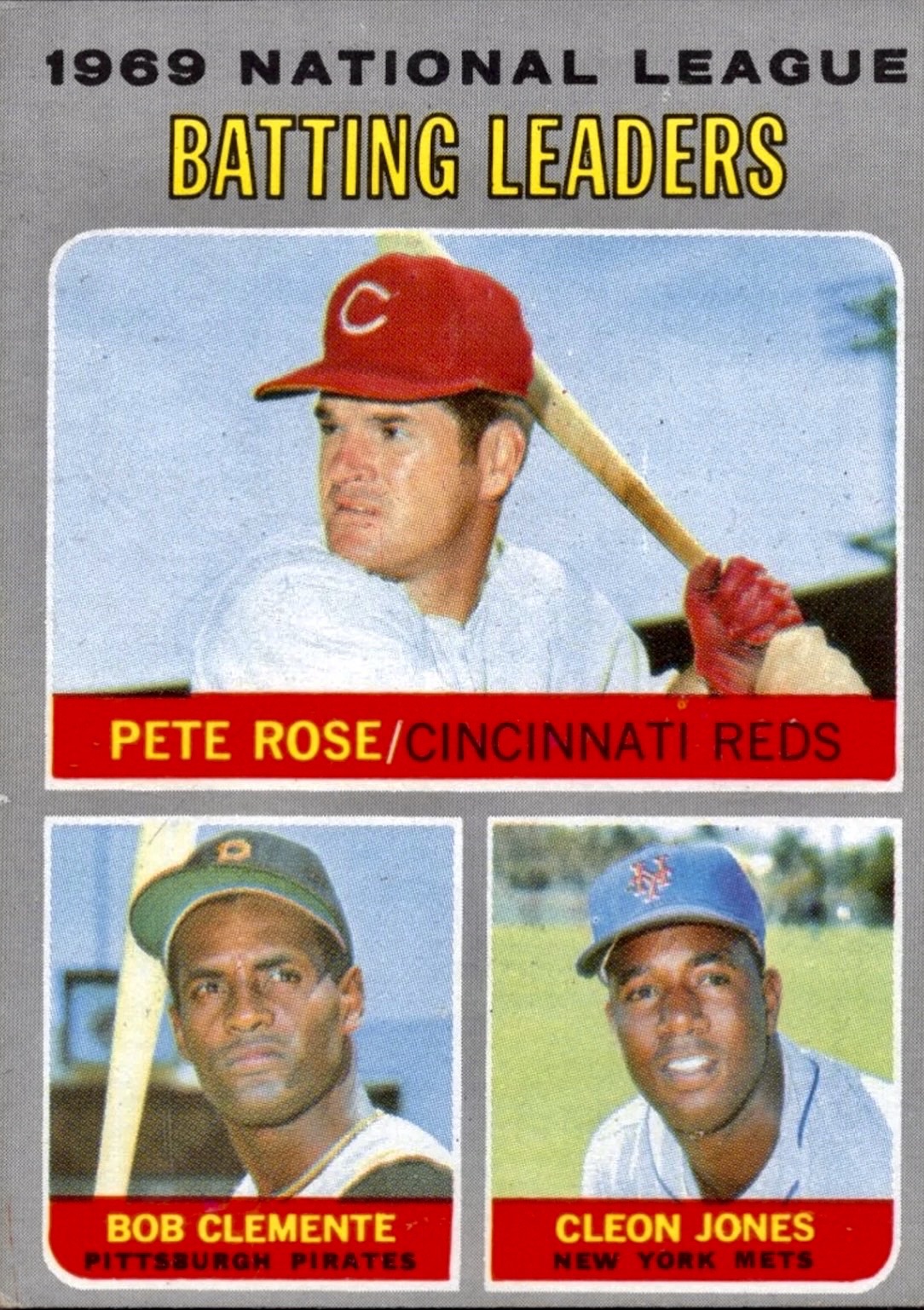
Considering the stats on the player cards for the 1968 Mets, it is amazing that they were basically the same group who turned into the 1969 Miracle Mets. Jones raised his batting average from .297 in 1968 to .340 in 1969; however, the most dramatic increase in offensive production came from Tommie Agee. After hitting just .217 with five home runs in 1968, Agee hit .271 with 26 home runs in 1969. Of course, the Miracle Mets were miraculous mainly due to the pitching of Tom Seaver, Jerry Koosman, and Gary Gentry.
Of the 20 players Strat-O-Matic included in their 1968 team set, only pitcher Dick Selma and backup infield Jerry Buchek did not return for the 1969 season. Pitcher Al Jackson and infielder Ed Charles were also not among the 20 players included in the 1969 Strat-O-Matic Mets. That set included pitchers Gentry and Jim McAndrew and infielders Donn Clendenon and Wayne Garrett.
I don’t know whether I ever will play another game of Strat-O-Matic. But looking back at the 1968 Mets player cards brought back lots of good memories from my childhood.
(All statistics are from Baseball Reference.)


Leave a Reply